Mold is rare; here are a few notes to help keep it that way.
If you take a look at your brew and see mold, it’s always a sad day. But before you do anything, stop for a minute and really look at it to make sure you actually have mold.
When it comes to mold, misidentification is quite high. I can’t even begin to tell you how many cases of what’s typically early SCOBY formation or yeast flocculation I’ve seen over the years that someone threw out because they thought it was mold.
Over the past decade, at the point of writing this, we’ve helped several hundred thousand people start their batches of kombucha, and along with that, we’ve seen endless pictures of suspected mold. The good news is that we usually have to look through hundreds and hundreds of suspected cases before we actually come across the real thing. The point is, if you think you have mold, do a little research before you launch the batch, because based on the numbers it’s highly likely that you don’t; that’s why we’re here.
When you do have mold, it’s usually pretty obvious, and that’s because kombucha mold is the same mold that grows on bread, so you’ve seen it many, many times. There’s really no such thing as kombucha mold; it’s just standard mold that takes hold on top of your batch.
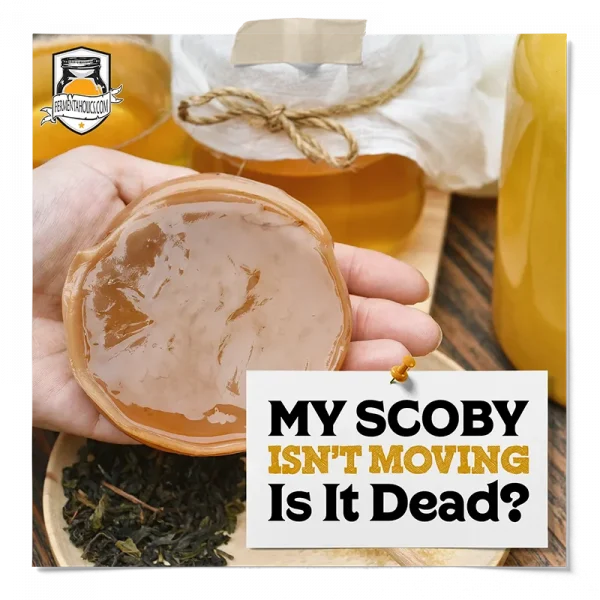
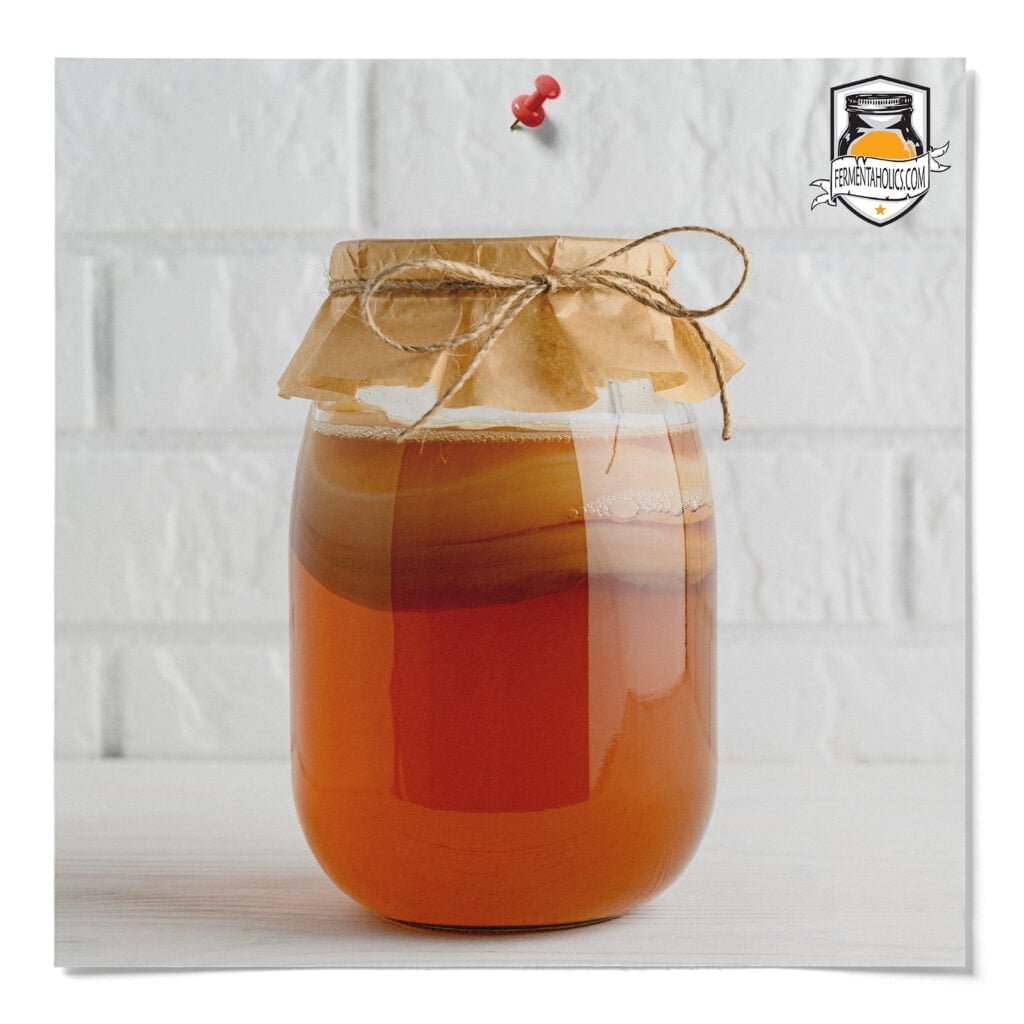
If you think you have mold, the likelihood is low, and you’re far more likely to be looking at a pellicle, the new SCOBY, forming. I say pellicle or new SCOBY because early formation is rarely uniform. It can start off in many different ways: a paper-thin layer, a creamy opaque hue, even a slimy-looking film, or circular patterns that resemble what mold would typically look like. Every batch looks a little different, so keep this in mind.
As kombucha ferments, you’re going to see things that look sketchy but most are normal. As time goes by, the creamy layer will thicken, and the dots you see will continue to look more like the SCOBY or pellicle you’re expecting.
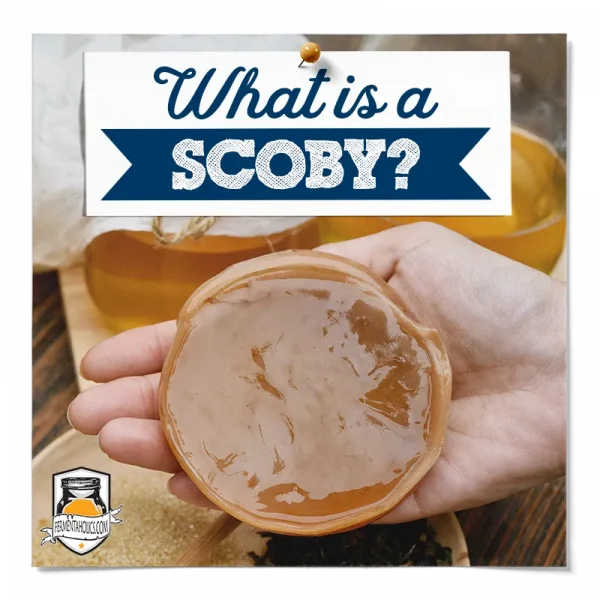
Another important note about mold: if you actually have mold, it will keep growing, so you don’t need to make the diagnosis this second, because it will continue to expand. In the coming days you’ll be able to tell which direction it’s heading. If you think you have mold, don’t just automatically toss it; verify it, or let it go three, four, five days longer and keep an eye on it. If it’s a SCOBY, it will keep developing and you’ll know; if it’s actually mold, it will keep developing and you’ll know. If the word pellicle is new to you, be sure to check out our post, What is a SCOBY?, for clarification.
So what are the best practices to keep your kombucha brew mold-free? The good news is it’s relatively easy, and there’s not one single thing you do that results in mold. There are little things that can increase the likelihood, so just by being aware of them you can greatly reduce the odds of this happening to begin with. Three of them matter most.
Your brew needs a warm spot, out of direct sunlight, with plenty of airflow. Colder brewing environments slow the fermentation down, and as it slows down, activity can go stagnant. A stagnant surface gives a mold spore the chance to land and take hold, unlike an active brew fermenting in the proper temperature range. So if you’re brewing in a cold environment, especially under 70°F, not only does this increase the likelihood of mold, it also slows the fermentation time down dramatically. Adjust the temperature, or be realistic about the fermentation time, which will stretch out by days and weeks depending on how cold it runs. Oftentimes when there is mold, it’s pretty common for it to correlate with a damp, moist, cool closet, a brew shut up somewhere out of the way. If that sounds like your current brewing location, don’t let that be you.
A low pH holds back a lot of spoilage organisms, but mold is tougher than most. Britannica’s article on fungi puts the pH range for mold growth at 3.5 to 8.0, meaning mold struggles to grow once a solution drops below 3.5. Your kombucha brew often starts at or below 4.5 and finishes between 2.5 and 3.5, so a warmer environment keeps fermentation at proper speed, which in turn drives the pH below 3.5 fairly quickly. The more active your ferment, the faster fermentation runs, and the faster you get below 3.5; another reason temperature matters.
You can easily check the pH with kombucha pH test strips, so always make sure your brew starts at the proper pH. You get there by adding 10 percent starter tea to your brew, or 12 oz for every 1 gallon. If this concept is new to you, check out our post on the Kombucha Brewing Ratios. Starter tea is simply aged kombucha tea, and our SCOBY comes packaged with enough liquid to safely inoculate and acidify each gallon batch.
$2.99
In stock
$2.99
In stock
$2.99
In stock

Over time, as your kombucha ferments, a SCOBY pellicle begins forming on the surface. If the SCOBY is allowed to stick up above the liquid, it becomes like a little island, and as it’s exposed to the open air, it becomes a magnet for mold spores to land and take hold. To put it another way, if we removed a SCOBY from the jar, set it on the countertop, and left it, mold would eventually start forming on it; it’s the same thing when the SCOBY pops up above the brew like that. There’s no guarantee on how long, it could be a week, it could be many months, but nonetheless it increases the likelihood. So if you see your SCOBY sticking up above the surface, go ahead and poke it down so it goes back under the liquid, where it’s protected by the acidity of the kombucha. A backup culture or a SCOBY hotel is a clutch addition for exactly these moments.
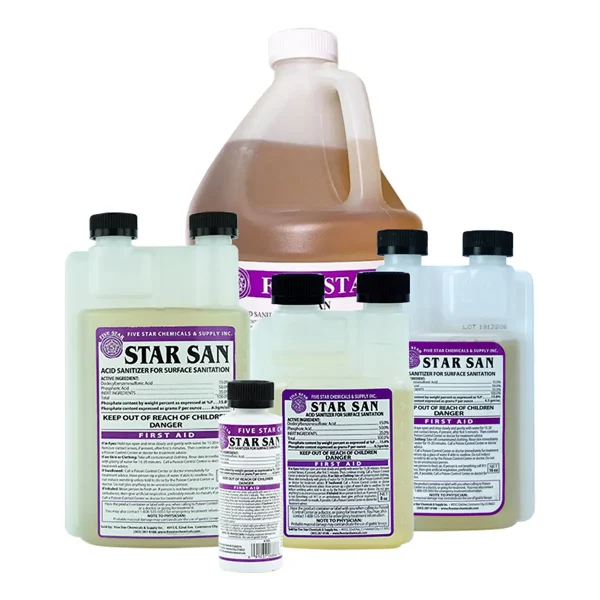
Cleaning doesn’t prevent mold, so don’t think of it that way. But if you do get mold, throw the batch and the culture out, and keep in mind that you want to do a good clean before moving forward. You can use soap and hot water, a vinegar and water solution, or Star San, a popular home-brewing acid sanitizer. Since I do a lot of brewing, I keep Star San in a spray bottle nearby; even if you don’t brew often, it’s nice to have around for wooden utensils and cutting boards, anything bacteria can seep into. If you do use soap and water, try a natural product, since many soaps leave residue on the surface that can interfere with your SCOBY.
Mold is rare, so don’t let the fear of it keep you from brewing. Keep your brew warm, get the pH down, and keep your SCOBY under the liquid, and you’ve stacked the odds heavily in your favor. If you ever catch yourself staring at the jar unsure of what you’re looking at, come back to this page and take a breath before you toss anything; nine times out of ten it’s just your SCOBY doing its thing. Be sure to sign up for our email list, and if you’re just getting started, we have live SCOBYs to brew with; our live starter culture comes packaged with enough starter tea to acidify your first batch. Don’t forget to pick up a pack of pH test strips too, so you can take the guesswork out.


$12.99
In stock
$2.14
Out of stock product
$2.49
Out of stock product
$9.99
In stock
$9.99
In stock
$4.49
Only 2 left in stock